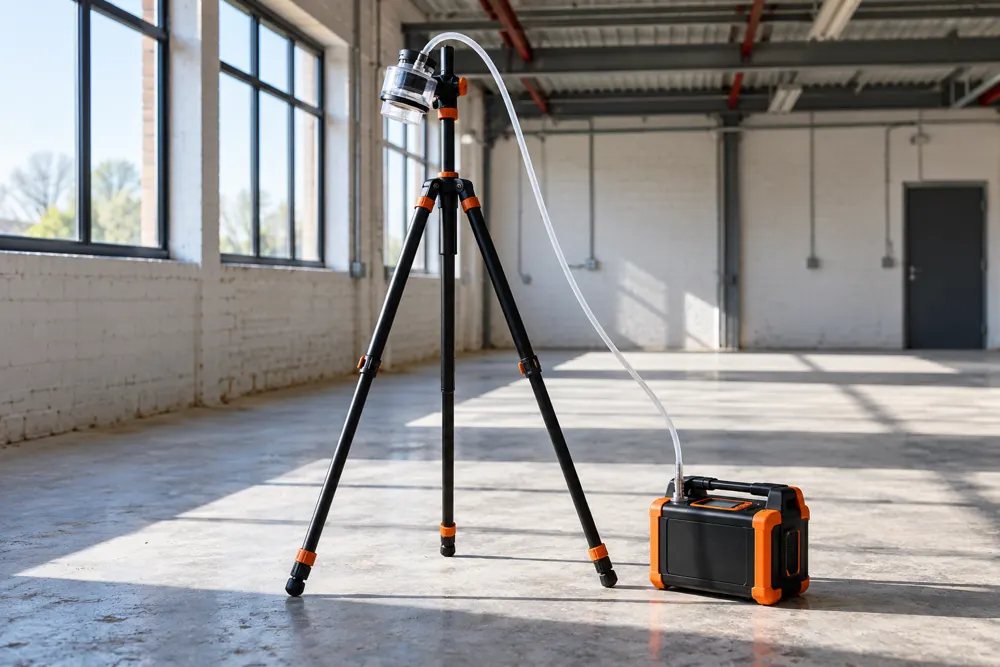
Air Monitoring With A Defined Purpose
Asbestos air testing measures airborne fibres under stated sampling conditions. It can form part of planned asbestos work, an investigation or a clearance process. The type of monitoring needs to match the question being asked because one air sample cannot answer every concern about a building.
For project managers, the most useful starting point is a clear brief. Explain whether the concern relates to an occupied area, the boundary of a work enclosure, worker exposure or reoccupation after removal. Include the relevant survey and details of any disturbance or removal activity.
Different Monitoring Tasks
Background monitoring can establish information about fibre levels before work under the conditions sampled. Leak monitoring can help assess control around an enclosure during relevant works. Personal monitoring focuses on a worker's exposure during a defined activity and serves a different purpose from room sampling.
Clearance sampling is associated with the process of confirming that an area can be handed back after relevant asbestos removal. It must not be treated as an isolated substitute for inspection and cleaning. The appropriate monitoring strategy depends on the risk assessment and the work being carried out.
A buyer should ask what the proposed test can demonstrate and what it cannot. The sampling location, duration, activity and site condition need to be meaningful for the question. An apparently reassuring result from the wrong setting may not support the decision you need to make.
Four-Stage Clearance
Where four-stage clearance is required, HSE publication HSG248 sets out the analytical guidance. The process covers a preliminary check, a thorough visual inspection, clearance air monitoring and a final assessment after the enclosure is dismantled. Successful completion supports the certificate of reoccupation for the defined area.
The visual inspection is an essential part of that process. An air result does not make visible debris or inadequate cleaning acceptable. If the conditions are not suitable, further work may be needed before the process can continue.
The analyst's appointment should protect independent judgement. HSE advises clients to appoint the analyst directly for clearance work rather than leaving that decision with the removal contractor. Agree the attendance, scope and reporting route early enough to fit the removal programme.
Planning Analyst Attendance
First, share the survey, removal scope and any available work plan with the proposed analyst. Identify the work area, enclosure boundaries, nearby occupied spaces and intended handover arrangements. This helps define what information and access will be required.
Next, agree the stage of the work at which monitoring is needed. Clearance attendance should be coordinated with completion of removal and cleaning, but the analyst must be able to assess actual conditions. Do not make reoccupation dependent on an assumed result at a fixed clock time.
During attendance, the analyst records the relevant site conditions and completes the agreed inspections and sampling. Reports should identify the areas, purpose, methods and results so they can be understood later. Any conditions or limitations need to be communicated to the person authorising access.
Understanding The Limits Of The Evidence
A satisfactory air result does not prove that a building has no asbestos-containing materials. Intact products can remain present without releasing fibres during the sampling period. A survey and register are still needed where the dutyholder must establish what materials are present.
Air monitoring also does not replace appropriate action after accidental disturbance. Stop the affected work and keep people away while a competent person assesses the situation. Cleaning, containment, investigation and the right type of monitoring may all be relevant depending on what happened.
Retain the report with the associated project records. For a removal project, link it to the survey, work scope and handover documents. Update the building's register to reflect actual removal, while leaving any remaining materials and exclusions visible to future maintenance teams.
Competence And Cost Factors
Ask whether the analyst and testing organisation have the competence and UKAS accreditation appropriate to the service being commissioned. Different activities can have different accreditation scopes. A general claim about accreditation is less useful than checking the relevant activity against the organisation's current schedule.
Cost depends on the purpose, sampling requirements, duration, number of areas and programme. Repeat visits, complex enclosures or further cleaning before clearance can affect attendance. Provide the work plan and project sequence so the quotation can state what is included and what may require a separate appointment.
If your question is about a suspect product rather than airborne fibres, use our asbestos testing service. If you need removal work and clearance planned together, explain that in your enquiry so the separate roles and responsibilities can be identified before work begins.
Your Questions Answered
Does An Air Test Prove A Building Is Asbestos Free?
An asbestos air test does not prove a building is asbestos free because it examines airborne fibres under particular sampling conditions. Asbestos-containing products can remain intact without releasing fibres during that period. A suitable survey is needed to investigate building materials, and a clearance decision may require inspections as well as air sampling.
Who Should Appoint The Clearance Analyst?
The clearance analyst should be appointed directly by the client where possible, following HSE guidance on maintaining independence from the removal contractor. Check the organisation’s competence and relevant accreditation scope before appointment. Agree the work area, required process, reporting arrangements and access so the analyst can assess the conditions without pressure to meet an assumed outcome.
Further guidance: HSE: Four-Stage Clearance And Air Monitoring · HSE: Accredited Analysts.